Proyectos Monclova


Colima 55
Roma Norte
Mexico City 06700
MEXICO

T. +52 (55) 4754 3546
+52 (55) 5525 9715
E. info@proyectosmonclova.com


Contact


02.06.2013 -- 22.06.2013
Proyectos Monclova Colima 55, Roma Norte Ciudad de México

Tragedy, (2011)
performance, Persian rug, dog.

A dog is given the instruction to ‘play dead’ on a Persian rug at different times during the exhibition.
“… what is ostensibly a memento mori, or more literally speaking a still life, or even better in French, a nature mort (dead nature), is but a specious reminder of death. ‘A specious reminder’ in the sense that not only is the dog not dead, but dogs, as is well known, do not die, since they do not know, as far as we know, that they can die. Of course, this does not mean they do not cease to exist, but their deaths are not anticipated by the anguish of death nor succeeded by the ceremony that acknowledges it. Thus is the fact of making them “play dead” but an egregious, self- indulgent anthropomorphism –one which, incidentally, becomes symbolic of the will to anthropomorphize tout court.”

Extract from essay on Tragedy by Chris Sharp, 2012

from 4 to 22 of June, 2013
Exhibition hours Tuesday to Friday / 16:00 – 18:00 Hrs. Saturday / 12:00 – 14:00 Hrs.


<i>Tragedy</i>, 2011</br>
Performance; tapete persa, perro
09.04.2013 -- 11.05.2013
Proyectos Monclova Colima 55, Roma Norte Ciudad de México


<i>Untitled</i>, 2013<br/>
Digital print<br/>
45 x 33 cm Exhibition view<br/>
<i>Montealbán</i>, 2013<br/>
Two photographs, 50 stamps Exhibition view Exhibition view Exhibition view 

<i>Silver Inc.</i>, 2013<br/>
Silver

<i>Zapata,</i> 2013<br/>
Soil from the Hacienda de Chinameca, marble container <i>Pesos</i>, 2013<br/>
Scale, 9mm bullet and soil. 2013<br/>
Oro de 10k

<i>Diez centavos (Ten Cents)</i>, 2013<br/>10 Kt gold
27.02.2013 -- 23.03.2013
Proyectos Monclova Colima 55, Roma Norte Ciudad de México

Thirteen pop songs stemming from philosopher Ludwig Wittgenstein make up the core of artists José León Cerrillo and Saralundén’s collaborative musical performance. The lyrics are based on elements of Wittgenstein’s book Bemerkungen über die Farben (Remarks on Color 1950), and were written between 2009 and 2012. In tandem with Wittgenstein’s theoretical investigations on the ways one can speak about color and transparency, the performance series is constructed around shadows and projections, and with music as an abstract form.

 
Exhibition view <i>The Wittgenstein Suite</i></!--:en--> Exhibition view <i>The Wittgenstein Suite</i></!--:en--> Exhibition view <i>The Wittgenstein Suite</i></!--:en--> Exhibition view <i>The Wittgenstein Suite</i></!--:en--> Exhibition view <i>The Wittgenstein Suite</i></!--:en--> Exhibition view <i>The Wittgenstein Suite</i></!--:en--> Exhibition view <i>The Wittgenstein Suite</i></!--:en-->
29.11.2012 -- 26.01.2013
Proyectos Monclova Colima 55, Roma Norte Ciudad de México

In many growing cities, in areas of low-income housing, it’s common to find piles of abandoned concrete blocks waiting for their last functional use: to form part of a constructive system, sometimes related to an expansion and /or improvement.

These concrete blocks are also found in irregular settlements at the margins of urban developments. Inhabitants from these areas are banned to use these blocks because of their durability, so housing is usually built with fragile materials. Despite this prohibition, the population gains access to these blocks, most of the times used ones, and treasure them as patrimony with the hope of being able to use them one day, in the construction of a more dignified housing.

These blocks, basic construction unites, embody the possibility for improving the living conditions of people. However, when these blocks are found in a state of potential construction, it is difficult to disregard them as ruins.

For this project, Tercerunquinto has established an economy circuit by requesting inhabitants from an irregular settlement in Monterrey to collect used, old or abandoned concrete blocks. The first hundred units will be collected within the community.* When the blocks run out in this area, these people will continue their search in neighbouring districts and so travelling across the city.

Each collected unit will be paid as a way of economical agreement. The recovered blocks will be sent from Monterrey to Mexico City periodically and will be arranged in the gallery space to progressively cover its walls.

In order to accomplish this economical circuit, Tercerunquinto has proposed the gallery directors to maintain the agreement with the people collecting the units, for as long as any interested collector in acquiring the work would like to. This way, the collector will actively participate in the project by determining the length of the agreement and deciding upon the volume of the recollected blocks.

At the extremes of this work, two forms of agreements are evident and distinguished by their economical scales, intersected by the piece that Tercerinquinto and Proyectos Monclova have negotiated.

Tercerunquinto
November de 2012

* Some of these blocks were digged up from the river adjacent to the community, that grew tremendously in 2010 as a consequence of the hurricane, Alex, that demolished many consructions nearby.


 Old Construction Units, An Economic Contract, Plus Another Possible</i>, 2012<br/>
Construction blocks; first stage 

 Old Construction Units, An Economic Contract, Plus Another Possible</i>, 2012<br/>
Construction blocks; first stage 

 Old Construction Units, An Economic Contract, Plus Another Possible</i>, 2012<br/>
Construction blocks; first stage 

 Old Construction Units, An Economic Contract, Plus Another Possible</i>, 2012<br/>
Construction blocks; second stage 

 Old Construction Units, An Economic Contract, Plus Another Possible</i>, 2012<br/>
Construction blocks; second stage 

 Old Construction Units, An Economic Contract, Plus Another Possible</i>, 2012<br/>
Construction blocks; second stage 

 Old Construction Units, An Economic Contract, Plus Another Possible</i>, 2012<br/>
Construction blocks; second stage 

 Old Construction Units, An Economic Contract, Plus Another Possible</i>, 2012<br/>
Construction blocks; second stage 

 Old Construction Units, An Economic Contract, Plus Another Possible</i>, 2012<br/>
Construction blocks; third stage 

 Old Construction Units, An Economic Contract, Plus Another Possible</i>, 2012<br/>
Construction blocks; third stage 

 Old Construction Units, An Economic Contract, Plus Another Possible</i>, 2012<br/>
Construction blocks; third stage 

<i>Constructive Units (Graphic Exercices)</i>, 2012<br/>
Mixta sobre papel<br/>
24 x 19.5 cm 

<i>Constructive Units (Graphic Exercices)</i>, 2012<br/>
Mixta sobre papel<br/>
24 x 19.5 cm
13.10.2012 -- 17.11.2012
Proyectos Monclova Colima 55, Roma Norte Ciudad de México

The works in the exhibition belong to a sequence that developed during four years. Each one of the components of the show is interrelated to the others, and each virtual splice is there to create multiple short circuits of meaning. The negative spaces between the pieces host many ellipses, fields of reflection that are a subcutaneous to the broader field.

An experience un Cali, Colombia, leads to Wroclaw in Poland; then to Egipt, and from Egipt to Peru. From the Marcahuasi plateau in the outskirts of Lima, to the valley of Tepoztlán in the outskirts of Mexico City and on to the stone forest of Fointainebleau near Paris. From Daniel Ruzo to Jacobo Grinberg-Zylberbaum; from Grinberg to Antonio Velasco Piña and the living myth of Regina. From Regina to Mexico’s contemporary reality. From 1948 to 1968, from 1942 to 2012… and on to an extraordinary dream with Barack Obama.
François Bucher


<i>The Second and a Half Dimension - An Expedition to the Photographic Plateau</i>, 2010<br/>
Mixed media, on variable dimensions

Exhibition view 

<i>The Second and a Half Dimension - An Expedition to the Photographic Plateau</i>, 2010<br/>
Mixed media, on variable dimensions

Exhibition view 
Exhibition view 

 
<i>The Duration of the Present</i>, 2012<br/>
Mixed media, variable dimensions

Exhibition view 
Exhibition view 
Exhibition view 
Exhibition view 


<i>The Man Who Disappeared.</i> (1st Chapter), 2011<br/>
HDV, video, color, sound, 22 minutes; Spanish with English subtitles

Exhibition view 


<i>The Man Who Disappeared.</i> (1st Chapter), 2011<br/>
HDV, video, color, sound, 22 minutes; Spanish with English subtitles


<i>The Man Who Disappeared.</i> (1st Chapter), 2011<br/>
HDV, video, color, sound, 22 minutes; Spanish with English subtitles


<i>Holographic Capture. Tepoztlan</i>, 2010<br/>
Found wooden branch

Exhibition view 

<i>The World was Flat, Now it's Round and it will be a Hologram</i>, 2012<br/> 
Mixed media, variable dimensions.


<i>Egregor</i>, 2012<br/>
Photograph and letters. 


<i>The Transferred Potential</i>, 2012<br/>
Phone cables
05.09.2012 -- 29.09.2012
Proyectos Monclova Colima 55, Roma Norte Ciudad de México

Nothing is new, neither is anything old.

-Robert Smithson, 1967

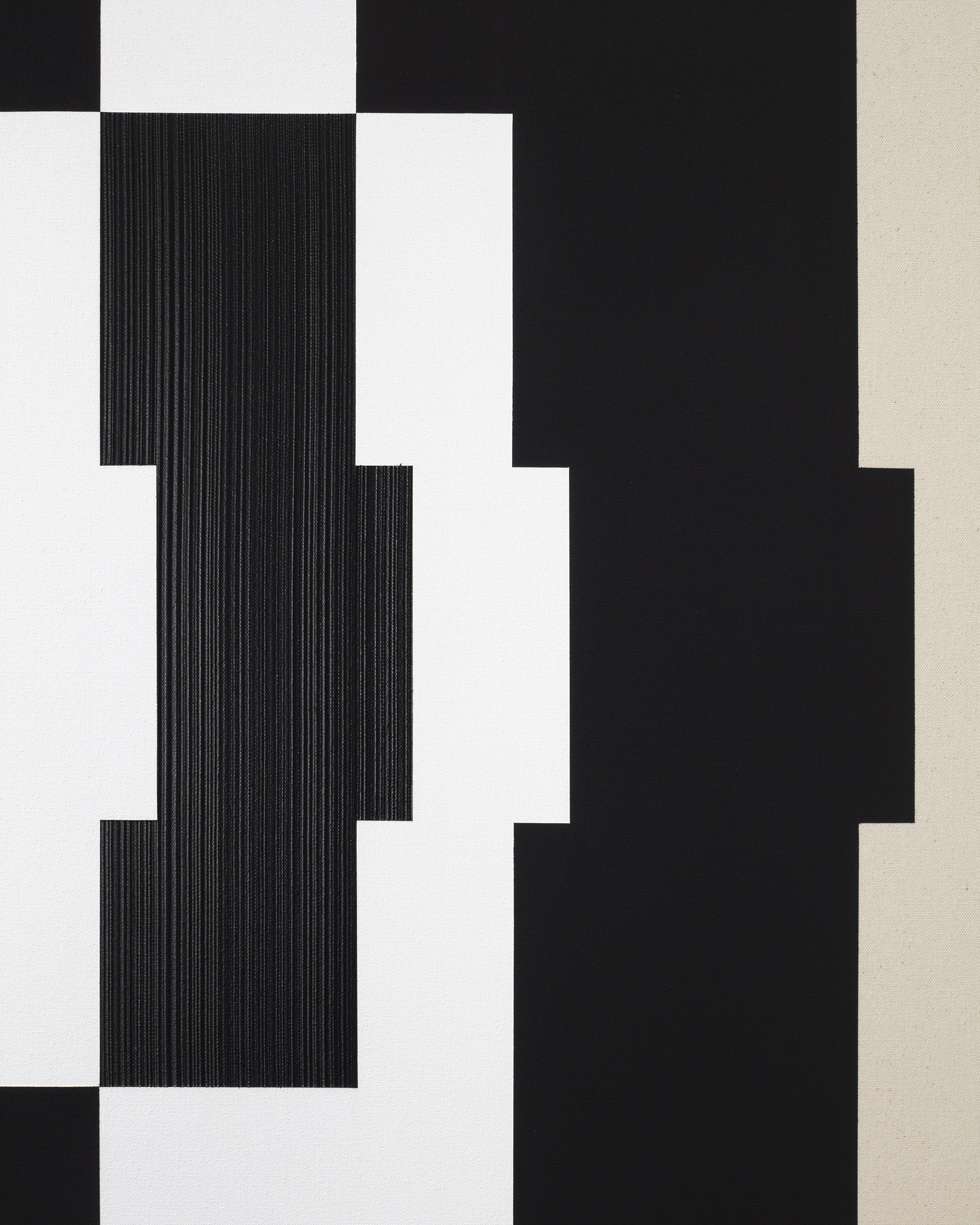
The works on show here are for the most part drawings made up of horizontals, verticals, diagonals, and sometime even curves, mapping areas that are often square and outlining multicolored, unlikely geometrical territories.

Two series confront each other: one in exponential expansion, the other organic; one reasonable and coldly logical, the other random and deliciously capricious. In a seemingly limitless interplay of combinations, Eduardo Terrazas explores the possibilities provided by compasses, rulers, acrylic paint and wool. Ahead of its time in many ways, his oeuvre—largely given shape during the 1970s—abundantly prefigures the paths taken by younger artists since then. It should be pointed out that he has long been a globetrotter—since well before art nomadics became a religion—and that he was quick to grasp the creative potential of Mexico’s streets. Inspired by art movements seen and absorbed during his travels abroad, his work is very much a part of what the 1960s were fomenting. While there are patent influences from Argentinian concreto, Brazilian neoconcreto and Op Art, he did not turn a deaf ear to the provocative siren song of mid-60s psychedelia—at the very least he produced his own version of its chromatic consequences.

One particular encounter would lead to symbiosis between these passions for the structural and the vernacular: in 1971 Eduardo Terrazas began working with Santos Motoaaopohua de la Torre de Santiago, and over a period of four years they produced an extensive series of colorful geometrical compositions using wool fixed to wooden boards with Campeche wax.

Resurfacing unpredictably and at irregular intervals, the Eduardo Terrazas oeuvre makes light of the demands of time.

— Michel Blancsubé

 
12.04.2012 -- 05.05.2012
Proyectos Monclova General León 31, San Miguel Chapultepec Ciudad de México
 
Exhibition view<br/> <i>people, something, people</i>, 2012<br/> 
<br/><i>Sin título (momentomaterial)</i><br/>
Alginato, repisa de madera laqueada en blanco<br/>
70 x 10 x 70 cm (al 12 de abril de 2012)


<i>Untitled</i><br/> 
Alginate, wooden shelf lacquered in white<br/>
11.5 x24 x 50 cm (as of April 12, 2012)
<br/><i>Untitled (materialmoment)</i><br/>
Alginate, wooden shelf lacquered in white<br/>
70 x 10 x 70 cm (as of April 12, 2012) 
Exhibition view<br/> <i>people, something, people</i>, 2012<br/> Exhibition view<br/> <i>people, something, people</i>, 2012<br/> 

<i>Untitled</i><br/>
Digital print on silk<br/>
80 x 246 cm


<i>Person leaning on his head, an extra</i><br/>
Alginate; 30 x 13 x 30 cm (as of April 12, 2012)


<i>Live Chat</i><br/>
Fluorescent Pelikan marker, glass, water.<br/> 
13 x 7.2 cm.


<i>Speculation is useless (for exteriors)</i><br/>
Anodized aluminum<br/>
4.5 x 10 x 108 cm


<i>Speculation is useless (for exteriors)</i><br/>
Anodized aluminum<br/>
4.5 x 10 x 108 cm